SEO Sucks When You Have a Common Name. Here’s What to Do About It.
August 20, 2013 § Leave a comment

When I was in high school, I dressed up as Where’s Waldo for Halloween. Little did I know it would be, like, a metaphor for how I’d later feel on the Internet. I’m deliberately NOT alt-tagging this with my name though, because this is actually kind of embarrassing.
Sometimes, I’m glad my name is a timeless classic. I’m thankful my parents didn’t brand me with something impossible to pronounce. Or embarrassing to write on a resume (I’m looking at you, Diamond and Princess). But there are times when I envy the Adriannes, Zoeys, and Clementines of the world.
Trying to achieve personal SEO is one of those times.
SEO is tough for anyone. But if you’re a Matthew or a Kate, or, God forbid, you had the misfortune of being born a Jones, fighting your way onto page 1 of Google is a serious uphill battle.
In a way, this feels kind of inevitable.
It starts in kindergarten. You become known as “your name-plus.” You answer to your full name or a nickname while everybody else is on a first-name basis. I had a teacher in elementary school who, unsure how to distinguish between two of my peers and I, settled on “Mary 1,” Mary 2,” and “Mary 3.” (If that doesn’t screw with a budding sense of self, I don’t know what does.)
Then came the screen name era. As anyone with a blah name will tell you, you can forget about scoring a username with any iteration of the words in your name, sans a string of numbers and random underscores. And there’s no chance you’ll get to use the same handle on AIM that you have on Hotmail.
I’m sure this is the only explanation for the idiotic usernames I kept using until way after it was cool.
Now, Mary 2 is expected to stand out in the wide world of Google—a pool just a teeny bit bigger than my third-grade classroom. If you’re like me, chances are somebody’s already snapped up www.yourname.com. (In my case, that domain’s lucky owner is a photographer from Nova Scotia who specializes in weirdly colorized semi-nudes. Go figure.)
If you’re just starting to stake your claim on the Web, there’s not much you can do about others who got there first. But there is hope, sort of.
Here are a few resources I’ve found helpful on personal branding and SEO:
- 3 tips for personal SEO, Marketing Sherpa
- 14-point checklist to Dominate Your Personal Brand on Google, KISSmetrics
- Seven Ways Writers Can Build Online Authority with Google+, Copyblogger
Basically, follow general best practices when it comes to personal SEO. But do it better than your name-clones.
As far as special tips for the plain-named, my teachers may have been right all along: tack on something to make it unique. Add your middle initial, a suffix, or a title to refer to yourself professionally. Grammar Girl is the first one that comes to mind (though I’m not sure why Mignon Fogarty uses it—she hit the unique-name jackpot).
I’m just starting to implement some of these guidelines, like adding my name to site meta titles and images and optimizing my social profiles. Check back with me in a few months. I’ll let you know how it all works out.
Or better yet, just Google me.
[UPDATE: I just wanted to add a link to this article published on Mashable last week. Another way to narrow the results Google returns for your name? Get hitched. “By adding a married name to your maiden name, this will create more search results from Google and keep the original SEO relatively intact. Even if you hyphenate the two last names, search results will go hardly unaffected if the maiden name is still next to your first name.” ]

Healthy writer = productive writer
July 29, 2013 § Leave a comment
Working from home comes with tons of awesome perks. (Conference calls in pajamas being chief among them.) And while I love the flexibility and freedom it offers, telecommuting does have one downside:
When you don’t ever have to leave home, it’s hard to make yourself get up and move.
I can’t deny that I’m more focused, productive, and even more creative on days I manage to squeeze a workout in. And I’ve tried to build early-morning runs and weekly yoga classes into my daily routine. But sometimes it’s easier to just stay glued to the computer (or snoozing in bed) instead of getting moving.
So I’ve learned to take breaks. Even taking just 5 minutes to stretch and recharge helps.
I didn’t arrive at this conclusion totally on my own, though—I’ve stolen some tricks from some writers who have been there. Here are some resources I’ve found that help writers focus on writing (not to mention become healthier all-around):
- Sit up straight. This is so simple, yet so hard to actually do (for me, at least). But Sedentary Death Syndrome is just about the most insidious way to die I’ve ever heard, so I’m not giving up yet.
- Stretch your most important writing muscles—your fingers! I literally have Diana’s “six simple stretches” printed out and posted above my desk. My favorite is the rubber band stretch—great for relieving stiff hands. Ahhhhhh…
- Clear your head. Daphne Gray-Grant’s newsletter and blog offer practical, no-nonsense writing advice week after week. This list includes some great ways to quiet your mind and quash anxiety—and they have nothing to do with writing. Go watch a movie or take a walk! I’m always surprised by how my productivity level seems to reset after a little break.
- Eat smart. For me, taking a break from work often means going in search of a snack. Nobody needs a junk food-free home more than a work-from-home writer. Keep fresh, healthy foods on hand, and you’ll remain energized and focused throughout the day.
When I first tried these strategies, it all felt like a chore. (Kind of like exercise itself: you know it’s good for you, but sometimes you just. don’t. want. to.) Or I felt like I was slacking off for doing something other than work.
Now, these have pretty much become habit (okay, fine, I’m still working on the sitting up straight thing). And there’s no doubt my writing has benefited. I guess I haven’t been slacking after all.
Got more secrets to staying healthy and focused while working from home? I’d love to hear them. Let me know in the comments.
J.K. Rowling wrote a new book. Forensic linguists found it.
July 18, 2013 § Leave a comment
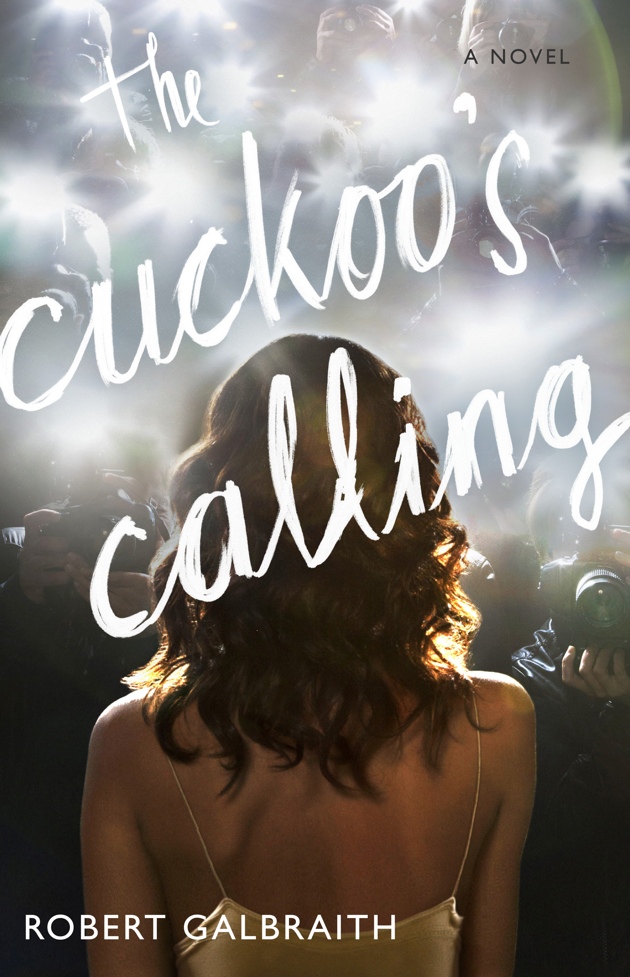 When I first heard the term “forensic linguistics,” I imagined crime-drama sleuths poring over the jumbled letters of a ransom note.
Sometimes, that’s part of their job description. But forensic linguists (also known as ‘stylometrists’) deal with less creepy stuff too, like digging up plagiarism, solving intellectual property disputes, or, this week, outing writer J.K. Rowling as the true author of The Cuckoo’s Calling, a novel written under the pen name Robert Galbraith.
This is huge news for Potter fans. (No surprise that once “Galbraith’s” identity was revealed, the book shot to the top of bestseller lists.) And for Rowling, this is either the end of an attempt to get some unbiased criticism—or a genius PR stunt.
Solving the mystery
But what’s really amazing is how researchers figured it out. After a U.K. Sunday Times writer got an anonymous tip on Twitter, he asked Patrick Juola, a computer science professor at Duquesne and specialist in the subject, to help crack the code.
Juola used a computer program he helped develop to sniff out the most commonly used words in Cuckoo (incidentally, it’s a detective novel). He then compared these to other works of Rowling’s—and to books published by other authors in the same genre.
Similar word-use proportions between two texts suggest—but obviously don’t prove—a single creator. Juola found that the style of The Cuckoo’s Calling was more similar to Rowling’s latest work, The Casual Vacancy, than non-Rowling novels he analyzed.
Turns out, authors wanting to remain nameless can’t just hide by swapping a few words and turns of phrase. What’s most revealing are writers’ uses of things like articles and prepositional phrases. We don’t think to change them because we use them pretty much without thinking.
New dream job?
As a writer who works for many different types of clients, this gives me pause. I like to think I can easily transform my voice and style based on a client’s needs. I’d also like to think that language, especially literature, is somehow immune to such cold analysis.
But I’m also pretty fascinated to see this way language and science can intersect. And I’m interested to see more applications of forensic linguistics in the future. The fact that a text can be reduced to features like word counts and “character 4-grams” doesn’t mean it’s flawed. After all, stylometrists just used it to expose the most accomplished writer in the world.
Read Juola’s explanation of the research and his results on Language Log this week.
Follow me on Feedly (it’s not so bad!)
June 26, 2013 § Leave a comment
 Less than a week from today, Google Reader will be no more. In preparation, I’ve migrated all of my feeds over to Feedly. (Here’s how to do that.) While it’s not quite as intuitive as Reader, in my opinion, it offers a good user experience and some nice discovery options. (Layout feature you don’t like? You can probably change it in your preferences.)
And since it doesn’t seem like Feedly will be abandoning us anytime soon, I’ve added a “Follow on Feedly” button to See Mary Write. That means you can follow me right along with your other favorite feeds (just what you wanted, right?).

Want a button of your own? Get one here.
Next week we enter the post-Reader world. I’ll see you there.
 MARY GABLE