Why ‘explainers’ matter
April 8, 2014 § Leave a comment
Last week, the Intergovernmental Panel on Climate Change (IPCC) released Part 2 of its report on global climate change (Part 1 came out in September 2013). The technical summary alone is 76 pages long—fortunately, it’s launched plenty of helpful explainer articles. I recently came across one bit of coverage, in response to Part 1’s release, that piqued my interest.
Greg Johnson summarized the report in a series of 19 illustrated haiku. I’m entranced by these little images, not just for their humbling messages (Forty years from now/children will live in a world/shaped by our choices.), but also for their communicative power.
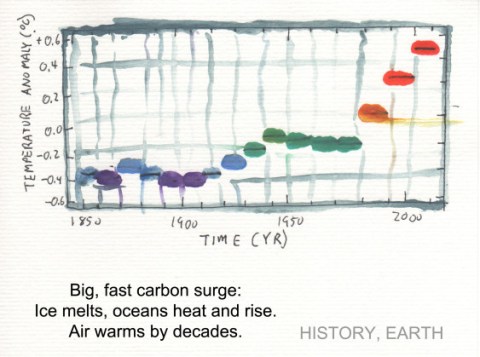
Today, information no longer belongs to the privileged few. Instead, we have the opposite problem: there’s more information out there than we can reasonably consume. We need the ‘explainers,’ people who can sort through the hard data and interpret crucial information for the rest of us.
Whether explaining how to adapt to a warming planet, apply for health coverage, or understand privacy online, this work of translation is more important than ever. Johnson’s haiku excel at this, but they’re just one example (think infographics, ‘listicles,’ or anything else that makes text easier to digest).
While these new ways of presenting information have been much maligned, Johnson’s work reminds me they can also be an incredibly effective way to communicate.
There’s no use calling it ‘wrong’ when there’s this much at stake.
Dreaming of summer in Spain
January 23, 2014 § Leave a comment
I’m taking my blog bi-continental this year by spending the summer in Barcelona. (I’m now realizing how very lucky I am to have a job without an office.)
Naturally, I’m spending most free moments conducting research on the city’s most important assets: bookstores and coffee shops.
Here’s where you’re likely to find me circa four months from now:

This looks like a perfect place to spend a morning at work. Via What Should I Eat for Breakfast Today?, A great blog on Barcelona food and more.

I love a good librería-cafe, because it means I can get my book and my coffee fix at once. Via In & Out Barcelona.
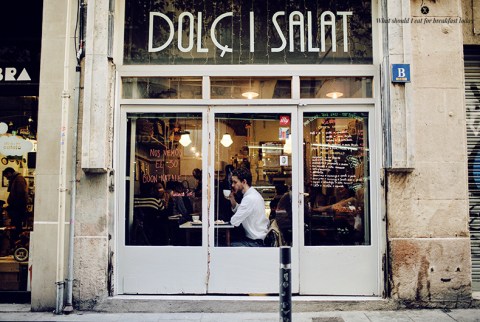
“Italian sweets, sandwiches for breakfast, and other snacks”? Count me in. Via What Should I Eat for Breakfast Today?.
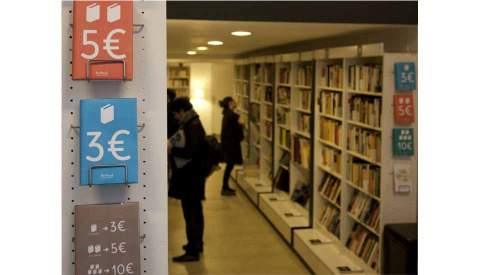
A used bookstore with a few locations in the city. Perfect for me, since I’ll be on a serious budget.
Got recommendations for other Barcelona reading and writing spots? I’d love to hear them. Until then, I’ll be counting the days…
Writing inspiration from an unlikely source
November 1, 2013 § Leave a comment
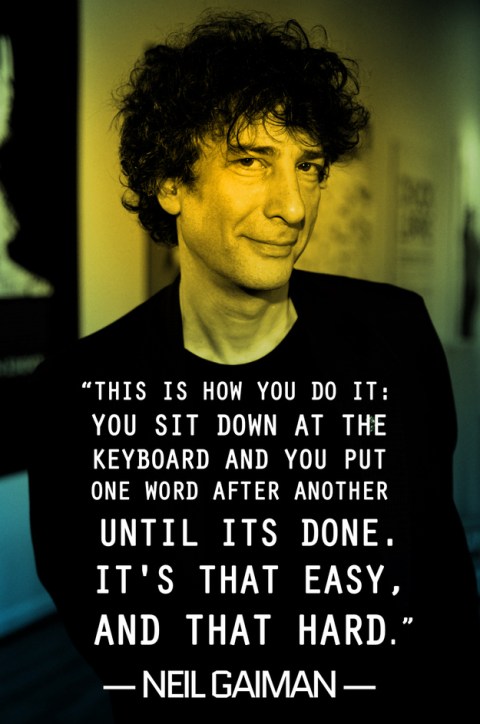
Brought to you by the Encyclopedia Britannica of cat GIFs and ’90s nostalgia, here’s a list (of course) from Buzzfeed of great quotes on writing. TGIF!
What’s on Your Mind? – NYTimes.com
September 3, 2013 § Leave a comment
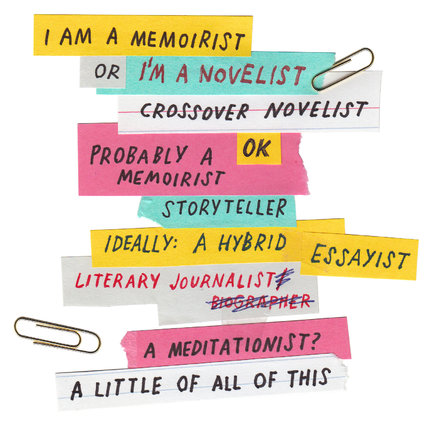
Love this article on the writer’s quest to understand the mind. (also love that she’s from Hudson, Ohio, where I lived as a kid.) I think writers, more often than those in other professions, are forced to think about how thoughts work. How ideas form and how they “feel” in the brain. How to lead a reader through an argument as you progress from one point to the next.
Writers don’t do science, of course. But understanding the little quirks and limitations of our minds can help us better understand—and communicate with—others.
Why emoticons & emoji are good news for English (well, maybe)
August 27, 2013 § Leave a comment
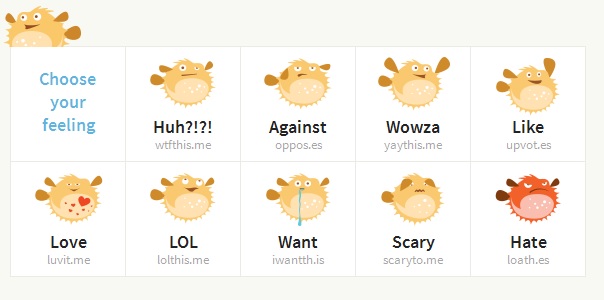 This article, published on Wired last week, makes me beyond excited. At first, I thought “The ‘Mood Graph’: How Our Emotions Are Taking Over the Web” was going to be another one of those “social media is rendering us incapable of human interaction/turning us into unfeeling device-addicted automatons/ruining our lives/etc.” pieces.
Instead, author Evan Selinger (a Fellow at the Institute for Ethics and Emerging Technology) takes a totally different stance. His argument: The written word, whether it appears on a postcard or in a tweet, is already a step removed from spoken communication. Whenever we write, we’re essentially translating our thoughts into the words and phrases available to us. (We do this when we speak, too, of course—but in writing, we usually strive to be more brief and linear than in casual speech.)
So what if digital communication’s latest little embellishments—emoticons, emoji, and the newly available Bitly for Feelings—could actually help us understand each other’s written musings better? Personally, I’ve come to think of these as a kind of punctuation, adding meaning to otherwise ambiguous statements.
Says Selinger, “How many times have you heard, for example, people observe (or console others) that ‘Oh, well, you can never really read tone in email?’”
Yes, forcing users to choose from a drop-down menu of a few dozen grinning and grimacing smileys might limit or simplify the ideas we can express. But wait, doesn’t language do the exact same thing? It’s well-known that there are many emotions for which English has no words.
Selinger explores the social and political implications of confessing our emotions to a blinking status bar. (There’s no doubt a company like Facebook will use its growing “mood data” to its advantage.) This is the first I’ve heard a writer frame emotional (pictorial?) communication this way. But I have a feeling it won’t be the last.
As sharing new aspects of our lives becomes more commonplace, I’ll be interested to see how these add-ons to our language shape and inform the way we communicate.
 MARY GABLE