Must-read writing on the Boston Marathon bombings
April 16, 2013 § Leave a comment
In the wake of tragedy, I find comfort in the work of thoughtful, skilled writers, those who somehow manage to put to paper the words the rest of us are still grappling to find. For me, writers’ words have always brought some sense to senselessness like this—or at least make me feel a little less alone.
Below is a selection of great articles I’ve read today in the aftermath of the attack on Boston.
- The People Who Watch Marathons, Erin Gloria Ryan, Jezebel.
- The Boston Marathon: All My Tears, All My Love, Dave Zirin, The Nation.
- Homemade Marathons, Susan Orlean, The New Yorker.
- The Marathon, Nathan Savin Scott, Thought Catalog.
- “If you are scared, they win. If you refuse to be scared, they lose.” Interview between Ezra Klein and Bruce Schneier, Wonkblog. Schneier actually published an article of his own in the Atlantic, but for me, this interview is even more crisp and powerful.
Elizabeth Gilbert: Writing Rules
February 8, 2013 § Leave a comment
This week on the new book industry site Bookish, Elizabeth Gilbert explains why it’s awesome to be a writer. I couldn’t agree with her more.
I can honestly say it’s the best life there is, because you get to live within the realm of your own mind, and that is a profoundly rare human privilege…You don’t have to wear a nametag, and–unless you are exceptionally clumsy–you rarely run the risk of cutting off your hand in the machinery. Writing, I tell you, has everything to recommend it over real work.
Roth’s Complaint: Elizabeth Gilbert Takes On Philip Roth – Bookish.
Malcolm Gladwell, on writing
December 31, 2012 § 1 Comment
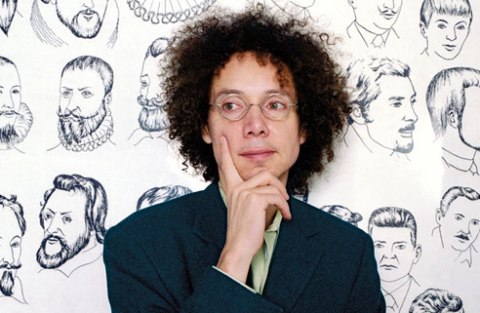
So, Malcolm Gladwell might be a secret spokesman for Big Tobacco. He knows how to tell a story. He was and remains a huge reason I’m doing what I do today. I don’t care how much he makes per speaking engagement—when his next book comes out in 2013, you bet I’ll be buying it—and taking notes.
Gladwell spoke on writing at Yale earlier this year. Here he is:
Gladwell called his entry into journalism “accidental,” having failed to find a job in advertising, but his journalistic interests stem from a passion for “telling stories.” Though his work has garnered widespread acclaim, he said he does not consider himself an original thinker. He does not “generate ideas” for his work, he said, but instead draws ideas from academic papers and finds ways to “make those ideas come alive.”
“I’m not doing the original work,” Gladwell said. “There’s that bird on the back of the elephant that picks off the ticks — I am the bird.”
What It’s Really Like To Be A Copy Editor | The Awl
December 15, 2012 § Leave a comment
This is wonderful. Copy editors (copyeditors?), you’ll be able to relate.
I never necessarily aspired to be a copy editor. I enjoyed the experience-seriously, your job is to sit and read articles-but when my day-camp counselor asked me what I wanted to be when I grew up, I did not tell her that I hoped one day to correct who-whom mix-ups or determine whether “faucetry” was a real, dictionary-approved word. I told her I wanted to be a princess.
How I Replaced Shakespeare – TIME
December 11, 2012 § Leave a comment
A few weeks back, Joel Stein, TIME’s occasionally hilarious humor columnist, wrote on California’s changing Common Core State Standards. By 2014, Golden State public school students will be reading less literature—and instead, consuming a balanced diet of novels and nonfiction.
Even though Stein’s a nonfiction writer himself, he’s not happy about that. And while I don’t necessarily agree with him (I think we have just as much to learn from great creative nonfiction as we do from Faulkner and Fitzgerald), for me, this statement rang true:
The first time I write in a new format–travel essay, screenplay, apology e-mail–I read a bunch of examples. But when I want my writing to improve, I read something that forces me to think about words differently: a novel, a poem, a George W. Bush speech.
As writers, it’s so easy to get stuck in our own ways, our tried-and-true manners of speech. That’s why we should always be in search of the new, the undiscovered—fiction and nonfiction included.
And of course, even as educators seek to strike a balance between the two, fiction will never really go away. As Stein points out,
Fiction also teaches you how to tell a story, which is how we express and remember nearly everything. If you can’t tell a story, you will never, ever get people to wire you the funds you need to pay the fees to get your Nigerian inheritance out of the bank.
And that’s a life skill we can all use. To read the rest of Stein’s article, (TIME subscribers only, sorry), click here.
 MARY GABLE