Why emoticons & emoji are good news for English (well, maybe)
August 27, 2013 § Leave a comment
 This article, published on Wired last week, makes me beyond excited. At first, I thought “The ‘Mood Graph’: How Our Emotions Are Taking Over the Web” was going to be another one of those “social media is rendering us incapable of human interaction/turning us into unfeeling device-addicted automatons/ruining our lives/etc.” pieces.
Instead, author Evan Selinger (a Fellow at the Institute for Ethics and Emerging Technology) takes a totally different stance. His argument: The written word, whether it appears on a postcard or in a tweet, is already a step removed from spoken communication. Whenever we write, we’re essentially translating our thoughts into the words and phrases available to us. (We do this when we speak, too, of course—but in writing, we usually strive to be more brief and linear than in casual speech.)
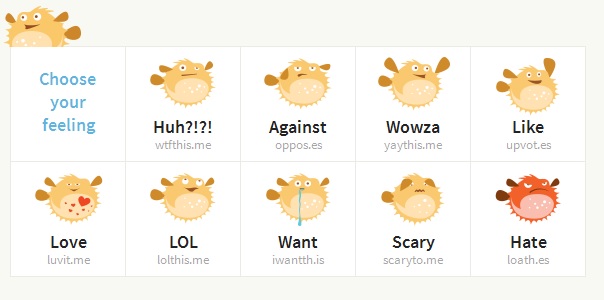
So what if digital communication’s latest little embellishments—emoticons, emoji, and the newly available Bitly for Feelings—could actually help us understand each other’s written musings better? Personally, I’ve come to think of these as a kind of punctuation, adding meaning to otherwise ambiguous statements.
Says Selinger, “How many times have you heard, for example, people observe (or console others) that ‘Oh, well, you can never really read tone in email?’”
Yes, forcing users to choose from a drop-down menu of a few dozen grinning and grimacing smileys might limit or simplify the ideas we can express. But wait, doesn’t language do the exact same thing? It’s well-known that there are many emotions for which English has no words.
Selinger explores the social and political implications of confessing our emotions to a blinking status bar. (There’s no doubt a company like Facebook will use its growing “mood data” to its advantage.) This is the first I’ve heard a writer frame emotional (pictorial?) communication this way. But I have a feeling it won’t be the last.
As sharing new aspects of our lives becomes more commonplace, I’ll be interested to see how these add-ons to our language shape and inform the way we communicate.
Mad Dash: How to Use the Dash in Writing – NYTimes.com
April 1, 2013 § Leave a comment

Image via NYTimes.com
Love Draft, love Ben Yagoda, love this post. Plus—I love the em dash.
Like hitting the right combination of buttons in a computer game, typing two hyphens on the keyboard — and thereby making a dash — can give your prose a burst of energy, as if by magic.
Style guides and scones
September 5, 2012 § 2 Comments
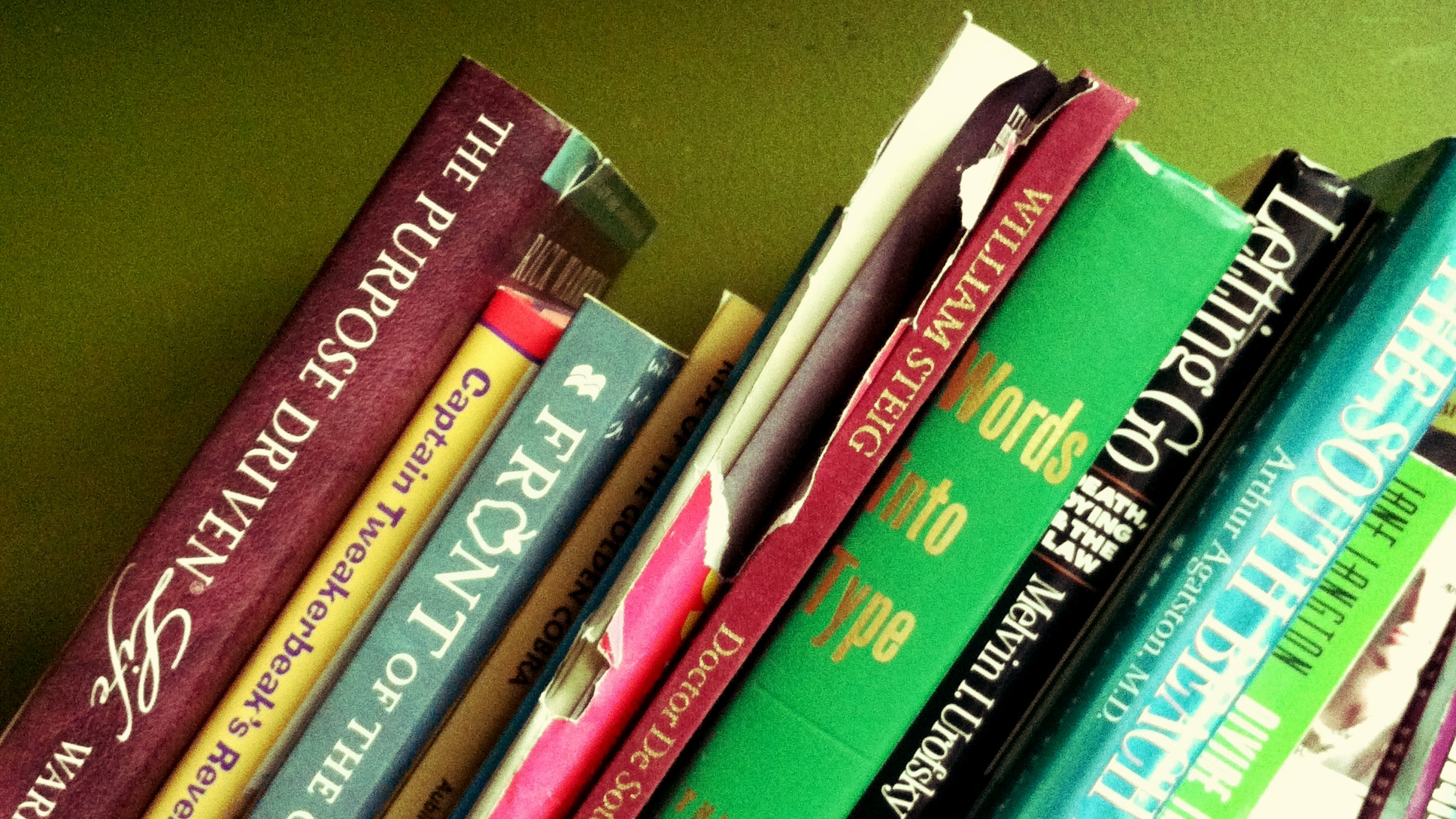
A few times a week, I’ve been camping out at the coffee shop on my block. It’s a nice change from my desk at home (plus, they have the best chocolate-chip cinnamon scones you’ve ever tasted). At my favorite corner in the back (tucked away, sort of, from the noisy cash register and espresso machine) is a little neighborhood book exchange.
It’s mostly your typical rummage-sale used book fare: think trashy paperbacks, battered coffee-table books on castles and gardening, and how-to guides with titles like Windows 2000 for Dummies. But one book caught my eye. Gold letters on a green spine: Words Into Type.
I’ve always had a thing for old-school style guides. Over the past few years, I’ve collected more than I’ll probably ever need (or use). But just one more can’t hurt, right?
Words Into Type contains the chapters you’d expect: editorial marks, citation styles, grammar and punctuation particulars. But there was one section I’d never seen before: a list of “prepositional idioms.” It reminded me of preposition lists I had to memorize as a student just beginning to learn Spanish. It never occurred to me that a similar list must exist for the English language.
For example, the word “identical” can only be followed, according to the guide, by the preposition “with;” “muse” with “on” or “upon.”
I’m not sure that today’s usage is quite as limited as thebook suggests (it counts “vest-pocket republic” and “like a bolt from the blue”—whatever those mean—among overused expressions). But I’m always happy to add another reference book to my shelf. Or maybe I should have traded it out for one I already own…

Here’s a link to “The Right Preposition” in the Words Into Type e-book.
I Won’t Hire People Who Use Poor Grammar. Here’s Why. – Kyle Wiens – Harvard Business Review
July 25, 2012 § Leave a comment
“On the face of it, my zero tolerance approach to grammar errors might seem a little unfair. After all, grammar has nothing to do with job performance, or creativity, or intelligence, right?
Wrong. If it takes someone more than 20 years to notice how to properly use “it’s,” then that’s not a learning curve I’m comfortable with.”
I Won’t Hire People Who Use Poor Grammar. Here’s Why. – Kyle Wiens – Harvard Business Review.
Words that don’t mean what you think they mean
May 26, 2012 § 1 Comment

“Enormity” and “nonplussed” have definitely tripped me up before. What other misunderstood words have you come across?
For this and other language- and grammar-related infographics, check out Grammar.net.
 MARY GABLE