D.C., here I come!
October 24, 2012 § Leave a comment

I’m headed to Washington, D.C., this weekend for a conference of the American Copy Editors Society (ACES). Titled “Editing Boot Camp,” it’ll be a refresher course for editors old and new, and a chance to meet others in the field. And since it will be my first-ever professional conference, I’ve been counting down the days until it starts.
I’m excited to hear Dragonfly’s own Samantha Enslen as one of the featured presenters, and meet the other Dragonfly editors coming in to town. But I’m also a little nervous: what should I bring? What should I wear? Will I have time for some lightning-fast sightseeing in between conference obligations? (Can I fist-bump the President before the big election?)
I’ll find out soon enough. See you at ACES!
Style guides and scones
September 5, 2012 § 2 Comments
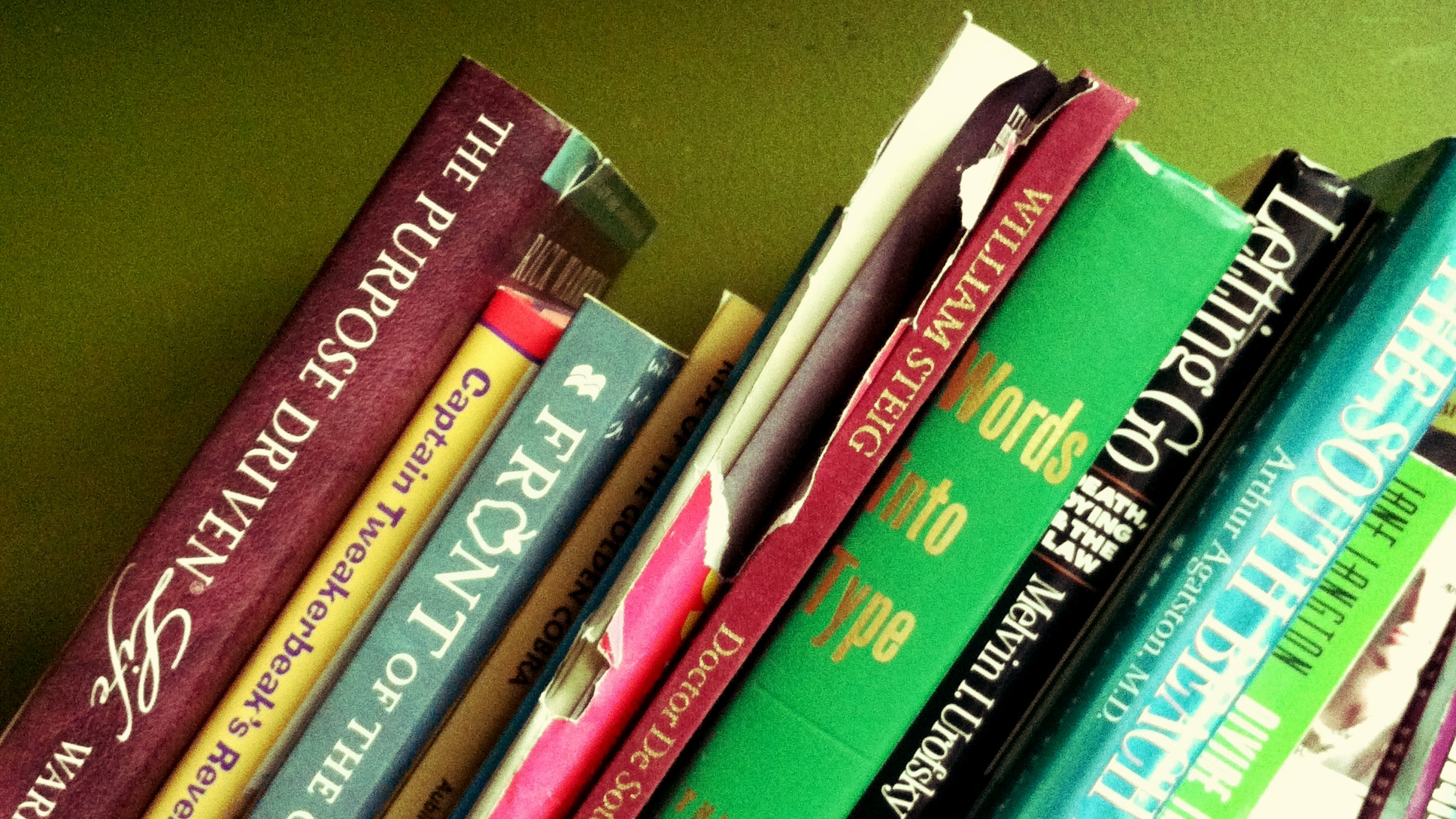
A few times a week, I’ve been camping out at the coffee shop on my block. It’s a nice change from my desk at home (plus, they have the best chocolate-chip cinnamon scones you’ve ever tasted). At my favorite corner in the back (tucked away, sort of, from the noisy cash register and espresso machine) is a little neighborhood book exchange.
It’s mostly your typical rummage-sale used book fare: think trashy paperbacks, battered coffee-table books on castles and gardening, and how-to guides with titles like Windows 2000 for Dummies. But one book caught my eye. Gold letters on a green spine: Words Into Type.
I’ve always had a thing for old-school style guides. Over the past few years, I’ve collected more than I’ll probably ever need (or use). But just one more can’t hurt, right?
Words Into Type contains the chapters you’d expect: editorial marks, citation styles, grammar and punctuation particulars. But there was one section I’d never seen before: a list of “prepositional idioms.” It reminded me of preposition lists I had to memorize as a student just beginning to learn Spanish. It never occurred to me that a similar list must exist for the English language.
For example, the word “identical” can only be followed, according to the guide, by the preposition “with;” “muse” with “on” or “upon.”
I’m not sure that today’s usage is quite as limited as thebook suggests (it counts “vest-pocket republic” and “like a bolt from the blue”—whatever those mean—among overused expressions). But I’m always happy to add another reference book to my shelf. Or maybe I should have traded it out for one I already own…

Here’s a link to “The Right Preposition” in the Words Into Type e-book.
Not THAT kind of ‘Olympic style’—AP releases Olympics editorial style guide
August 5, 2012 § 2 Comments
(image via http://yfrog.com/4bfw5mj)
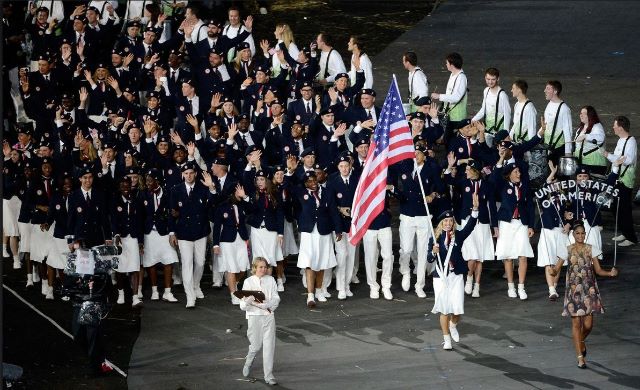
It’s that time of the quadrennium again: time to plunk down in front of the TV, brush up on some world geography, and cheer on athletes for sports you didn’t even know existed (trampoline, anyone?). In honor of the Summer Olympics, here’s the AP’s editorial style guide to the games (not Games, as I learned after reading). Here are a few of the highlights:
Olympics or Olympic Games
Always capitalized. There are Summer Olympics and Winter Olympics, or Summer Games and Winter Games.
Olympics
Noun. Always capitalized.
Olympic
Adjective (without s) and always capitalized: Olympic gold medal, Olympic organizers, Olympic host city, Olympic flame, etc.
Olympiad
A period of four years beginning on Jan. 1 of the Olympic year. Olympiads are numbered consecutively in Roman numerals from the 1896 Athens Games. The XXX Olympiad that includes the London Games began Jan. 1, 2012.
Olympian
Any athlete who has been to the Olympics.
London Games, London Olympics
Capitalized. Also, 2012 Olympics or 2012 Games. London Summer Olympics and London Summer Games.
Games
Capitalized when attached to the host city or year: the London Games and the 2012 Games.
games
Standing alone, lowercase: The games open on July 27.
The year
Always precedes the host city and Olympics: 2012 Olympics, 2012 London Games.
Happy cheering!
Just when I thought I was done with school…
June 7, 2012 § Leave a comment

I’m a couple of weeks into my part-time internship with Dragonfly Editorial, a technical/medical writing and editing firm based out of Tipp City, Ohio. It’s a little different from other communications jobs I’ve had, since the firm’s staff hail from all over the country, but working from my new home office has been a huge perk.
I’m writing a series of profiles of fellow staff members for the company’s blog, which means I’m not only getting to meet accomplished writers and editors from all walks of life, I’m also learning another bonus of being a freelance writer: flexibility. Flexibility to dodge the 9-5 work routine, to opt out of the maddening commute. I interviewed one editor last week who’s training to become a semi-professional ice dancer; another rides dressage in her free time.
Another one of my assignments is to develop some expertise as a proofreader and copyeditor. To aid me in this quest, I have a couple of workbooks (Mark my Words and Substance &Style) to complete. It reminds me a little bit of my elementary school days, filling out Wordly Wise primers (remember those?) on proper vocabulary usage.
Being the word nerd that I am, I’m loving them. For me, working through these volumes is like reading a really good novel—I can’t wait to get to the next chapter to learn the next proofmark, complete the next exercise.
I could get used to this.
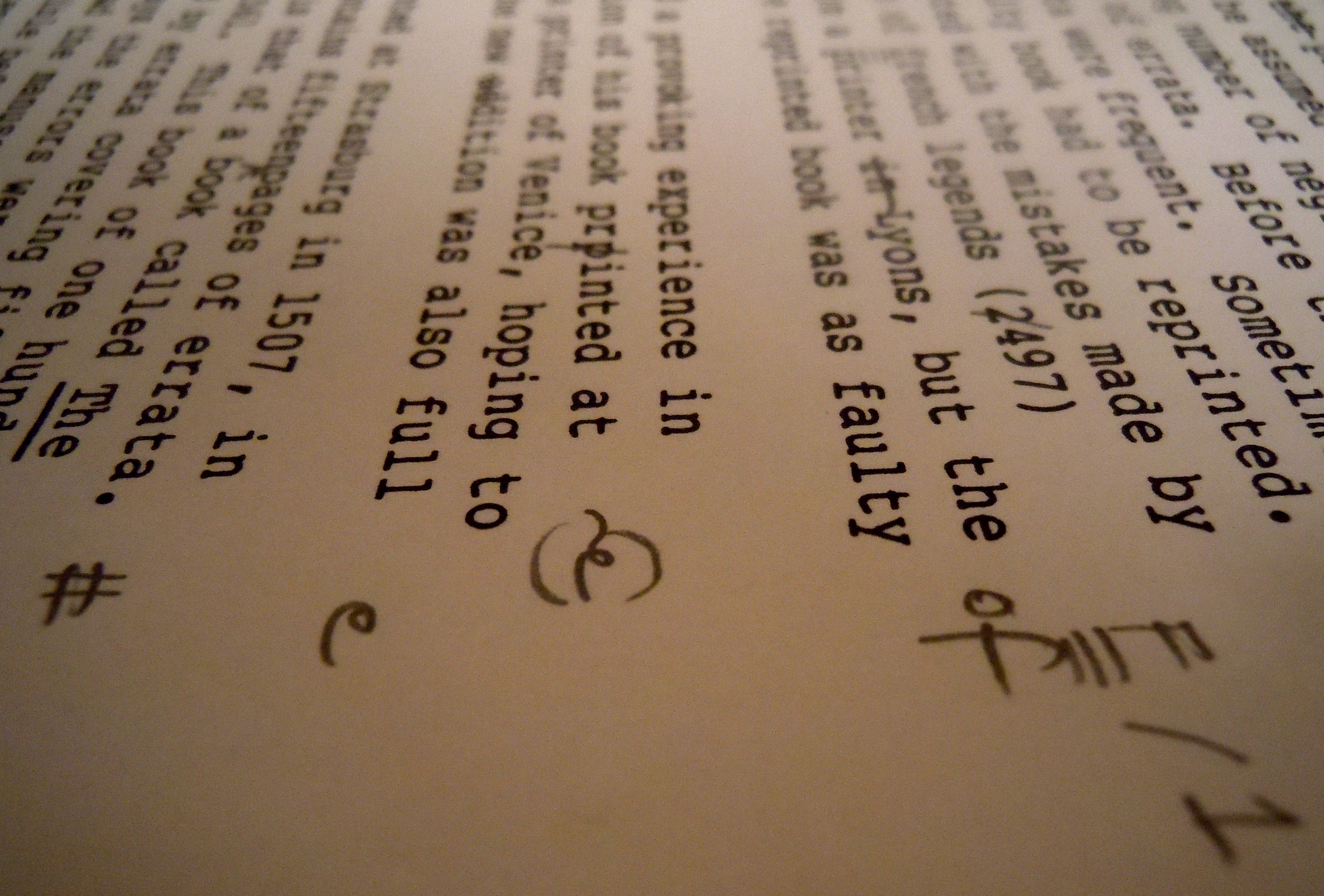
(More) tips for writing well (from Austin Govella at Thinking and Making)
February 16, 2012 § 1 Comment
“As an editor, I’ve noticed several recurring bad habits you heathens would do well to disabuse yourselves of immediately.
Almost without exception, these bad habits instantiate themselves as a series of stock phrases and constructions that reflect a lack of focus, a lack of fully developed argument, or the kind of intellectual laziness that sets in as you slog through your first draft.
These things happen, That’s ok. Editing helps you save yourselves from these offenses before your thoughts hit the world and everyone knows your dirty secrets. but you can edit yourself, and you should. Use the followingchecklist as a guide to tightening up both your words as well as and what you mean…” read more
 MARY GABLE