Dreaming of summer in Spain
January 23, 2014 § Leave a comment
I’m taking my blog bi-continental this year by spending the summer in Barcelona. (I’m now realizing how very lucky I am to have a job without an office.)
Naturally, I’m spending most free moments conducting research on the city’s most important assets: bookstores and coffee shops.
Here’s where you’re likely to find me circa four months from now:
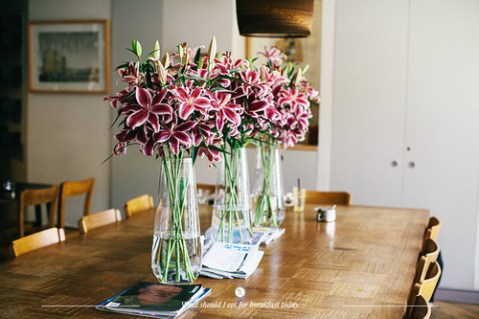
This looks like a perfect place to spend a morning at work. Via What Should I Eat for Breakfast Today?, A great blog on Barcelona food and more.

I love a good librería-cafe, because it means I can get my book and my coffee fix at once. Via In & Out Barcelona.
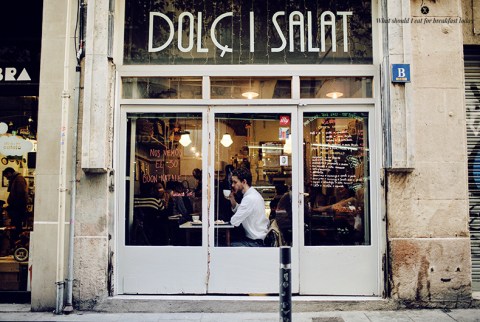
“Italian sweets, sandwiches for breakfast, and other snacks”? Count me in. Via What Should I Eat for Breakfast Today?.
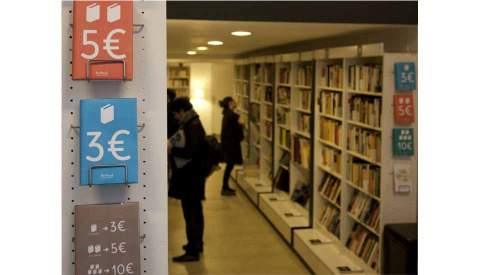
A used bookstore with a few locations in the city. Perfect for me, since I’ll be on a serious budget.
Got recommendations for other Barcelona reading and writing spots? I’d love to hear them. Until then, I’ll be counting the days…
Fall reading list: The Lowland
October 5, 2013 § Leave a comment
The start of fall weather has me ready to throw on a sweater and cozy up with a good book. Lucky for me, a few of my favorite authors have new titles out this year. (Good for my bookshelf and the book shop around the corner, not so good for my wallet.) Over the next few weeks, I’ll be writing about a few of the books I’m looking forward to reading this fall.
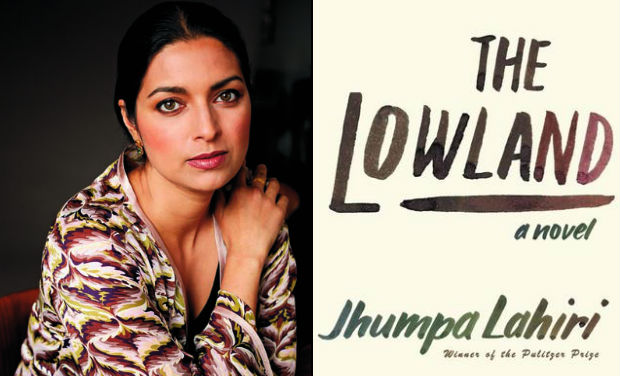
The Lowland
I don’t read many novels these days, but reading Jhumpa Lahiri reminds me why I should. Newsweek once said of Lahiri that she “writes such direct, translucent prose you almost forget you’re reading.”But I feel the opposite: I feel hyper-aware of reading, in the best way possible. I find myself rereading sentences, paragraphs, scrutinizing and savoring them as long as I can. I’m not exaggerating.
I had my calendar marked for this book’s September release. And I’m about halfway through The Lowland now (an autographed copy—thanks, A Cappella Books!). Lahiri’s first novel, The Namesake, will always be an all-time favorite, so Lowland has some stiff competition—but as always, I’m loving being transported to the world of Lahiri’s characters, feeling their desire and heartache and grief. Then feeling it over and over again.
An excerpt from The Lowland novel, titled “Brotherly Love,” was published in The New Yorker in June (major spoiler alert). For another introduction to Lahiri, Interpreter of Maladies, the author’s first short story collection, also has my seal of approval (oh, yeah, and a Pulitzer).
Now, if you’ll excuse me, I’m going to go back to reading.
J.K. Rowling wrote a new book. Forensic linguists found it.
July 18, 2013 § Leave a comment
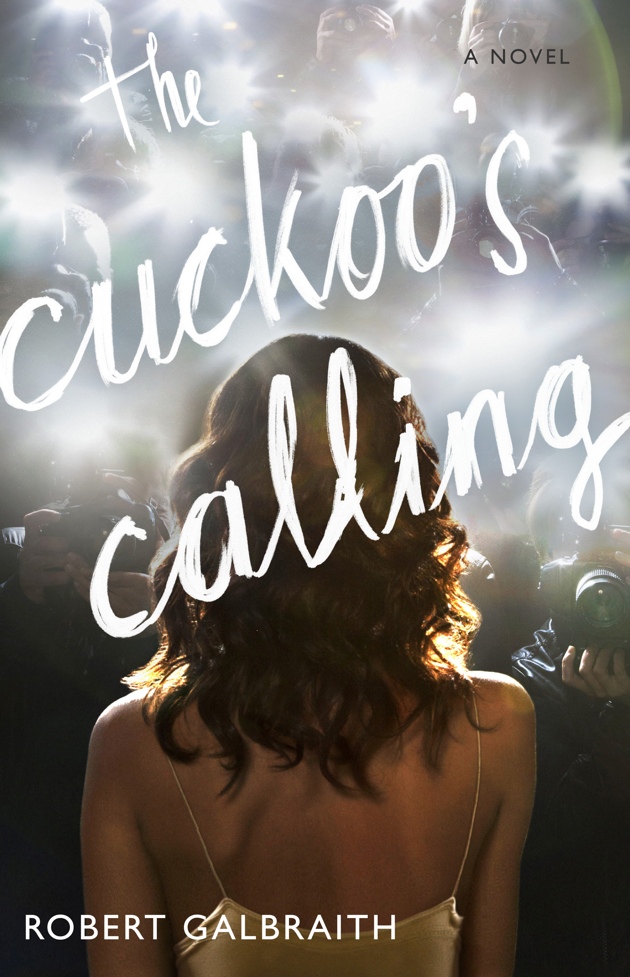 When I first heard the term “forensic linguistics,” I imagined crime-drama sleuths poring over the jumbled letters of a ransom note.
Sometimes, that’s part of their job description. But forensic linguists (also known as ‘stylometrists’) deal with less creepy stuff too, like digging up plagiarism, solving intellectual property disputes, or, this week, outing writer J.K. Rowling as the true author of The Cuckoo’s Calling, a novel written under the pen name Robert Galbraith.
This is huge news for Potter fans. (No surprise that once “Galbraith’s” identity was revealed, the book shot to the top of bestseller lists.) And for Rowling, this is either the end of an attempt to get some unbiased criticism—or a genius PR stunt.
Solving the mystery
But what’s really amazing is how researchers figured it out. After a U.K. Sunday Times writer got an anonymous tip on Twitter, he asked Patrick Juola, a computer science professor at Duquesne and specialist in the subject, to help crack the code.
Juola used a computer program he helped develop to sniff out the most commonly used words in Cuckoo (incidentally, it’s a detective novel). He then compared these to other works of Rowling’s—and to books published by other authors in the same genre.
Similar word-use proportions between two texts suggest—but obviously don’t prove—a single creator. Juola found that the style of The Cuckoo’s Calling was more similar to Rowling’s latest work, The Casual Vacancy, than non-Rowling novels he analyzed.
Turns out, authors wanting to remain nameless can’t just hide by swapping a few words and turns of phrase. What’s most revealing are writers’ uses of things like articles and prepositional phrases. We don’t think to change them because we use them pretty much without thinking.
New dream job?
As a writer who works for many different types of clients, this gives me pause. I like to think I can easily transform my voice and style based on a client’s needs. I’d also like to think that language, especially literature, is somehow immune to such cold analysis.
But I’m also pretty fascinated to see this way language and science can intersect. And I’m interested to see more applications of forensic linguistics in the future. The fact that a text can be reduced to features like word counts and “character 4-grams” doesn’t mean it’s flawed. After all, stylometrists just used it to expose the most accomplished writer in the world.
Read Juola’s explanation of the research and his results on Language Log this week.
The Curious Incidence of Dogs in Publishing – Slate Magazine
April 15, 2013 § Leave a comment
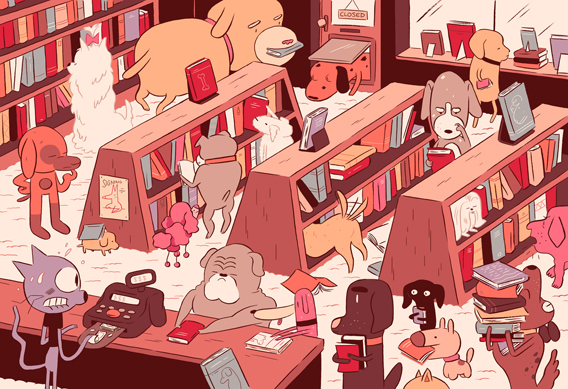
Illustration by Luke Pearson for Slate
Everybody knows that the Internet belongs to cats. Books, conversely, have typically been the domain of dogs. (Think Old Yeller, The Art of Racing in the Rain, Marley & Me.) But why’s that the case?
In a surprisingly well-researched, so-serious-it’s-hilarious account, Slate’s Daniel Engber investigates.
Why are dogs popular in books, and cats popular on the Internet? – Slate Magazine.
Elizabeth Gilbert: Writing Rules
February 8, 2013 § Leave a comment
This week on the new book industry site Bookish, Elizabeth Gilbert explains why it’s awesome to be a writer. I couldn’t agree with her more.
I can honestly say it’s the best life there is, because you get to live within the realm of your own mind, and that is a profoundly rare human privilege…You don’t have to wear a nametag, and–unless you are exceptionally clumsy–you rarely run the risk of cutting off your hand in the machinery. Writing, I tell you, has everything to recommend it over real work.
Roth’s Complaint: Elizabeth Gilbert Takes On Philip Roth – Bookish.
 MARY GABLE