A Backpfeifengesicht by any other name…
September 28, 2012 § Leave a comment
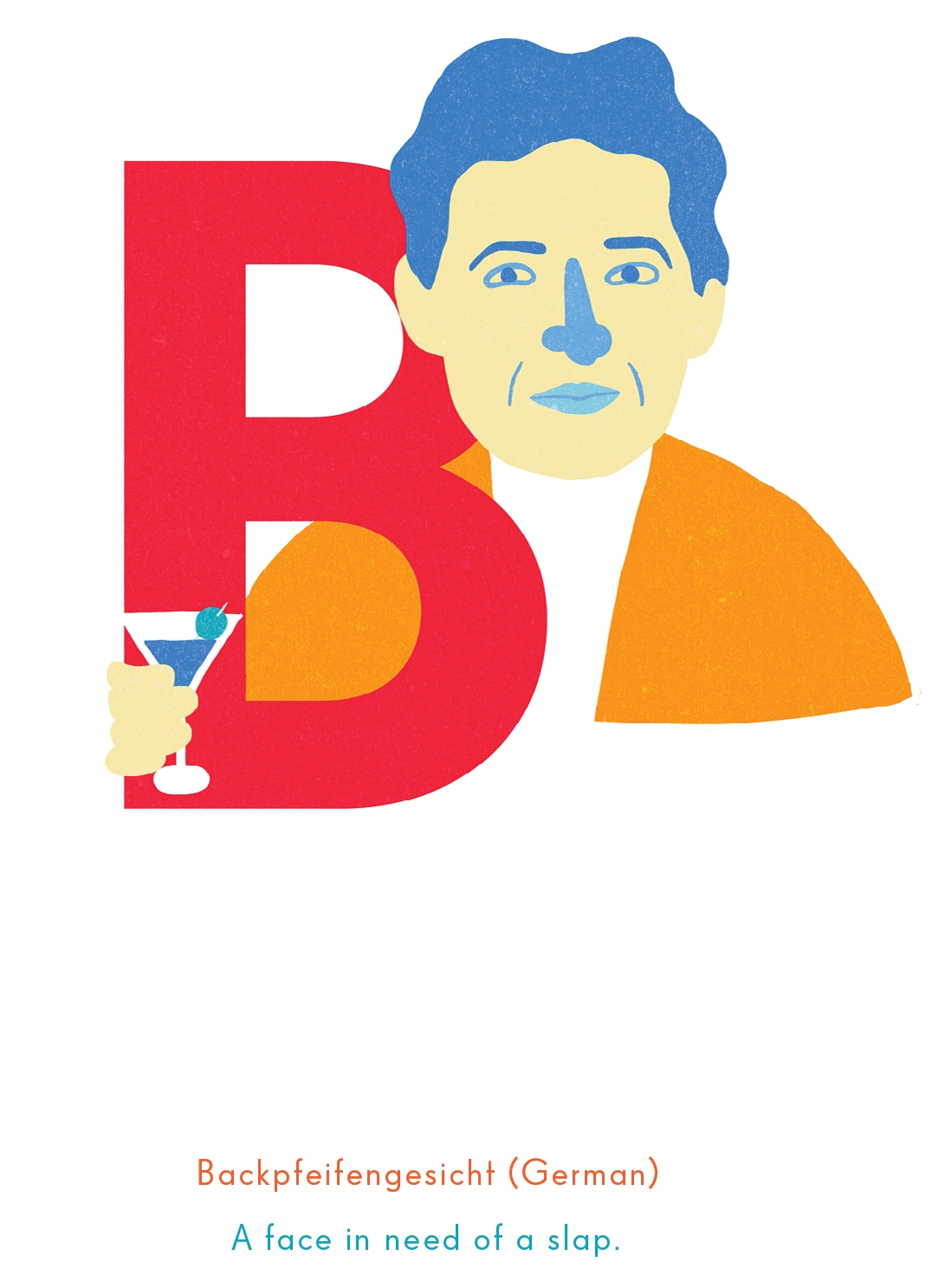
(via Fuchsia Macaree)
I love stumbling across “untranslatable” words: those that sum up an idea in a single word where other languages demand three or four.
Some words we American English-speakers don’t have because we don’t really need them. Like the Finnish word tokka, a large herd of grazing reindeer. We can probably get by without that one.
Others relay concepts we simply haven’t thought to express. There’s mamihlapinatapei from the South American indigenous language Yagan. It’s a “wordless yet meaningful look shared by two people who both desire to initiate something, but are both reluctant to start.”
Gigil, from Filipino, is “the irresistible urge to pinch or squeeze something cute.” (Why didn’t anyone tell me there was a word for that?!)
Tartle is that awkward hesitation upon running in to someone whose name you can’t remember.
The list goes on. Even after a year of researching this stuff for my thesis, I’m still enamored by these neat little packages of words. There’s something satisfying about seeing an idea expressed just right. Now, if only there was a word for that…
For more untranslatables, go to Better Than English—they post a new word every day.
Also check out Fuchsia Macaree’s untranslatable alphabet. Letter “B” is pictured above.
Freelancer’s 5 secrets of staying sane | dragonfly editorial
September 20, 2012 § Leave a comment
Bestsellers have typos, too
September 10, 2012 § Leave a comment

I’m partway through (and loving) Yes, Chef, the memoir of renowned Ethiopian-Swedish-American chef Marcus Samuelsson. Just finished the chapter on his long-standing beef with chef Gordon Ramsay (of “Hell’s Kitchen” fame). Something tells me that spelling Ramsay’s name wrong isn’t going to do much for their relationship…
Style guides and scones
September 5, 2012 § 2 Comments

A few times a week, I’ve been camping out at the coffee shop on my block. It’s a nice change from my desk at home (plus, they have the best chocolate-chip cinnamon scones you’ve ever tasted). At my favorite corner in the back (tucked away, sort of, from the noisy cash register and espresso machine) is a little neighborhood book exchange.
It’s mostly your typical rummage-sale used book fare: think trashy paperbacks, battered coffee-table books on castles and gardening, and how-to guides with titles like Windows 2000 for Dummies. But one book caught my eye. Gold letters on a green spine: Words Into Type.
I’ve always had a thing for old-school style guides. Over the past few years, I’ve collected more than I’ll probably ever need (or use). But just one more can’t hurt, right?
Words Into Type contains the chapters you’d expect: editorial marks, citation styles, grammar and punctuation particulars. But there was one section I’d never seen before: a list of “prepositional idioms.” It reminded me of preposition lists I had to memorize as a student just beginning to learn Spanish. It never occurred to me that a similar list must exist for the English language.
For example, the word “identical” can only be followed, according to the guide, by the preposition “with;” “muse” with “on” or “upon.”
I’m not sure that today’s usage is quite as limited as thebook suggests (it counts “vest-pocket republic” and “like a bolt from the blue”—whatever those mean—among overused expressions). But I’m always happy to add another reference book to my shelf. Or maybe I should have traded it out for one I already own…

Here’s a link to “The Right Preposition” in the Words Into Type e-book.
Not THAT kind of ‘Olympic style’—AP releases Olympics editorial style guide
August 5, 2012 § 2 Comments
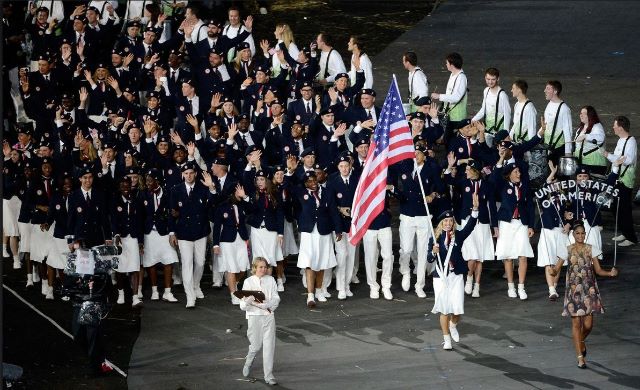
(image via http://yfrog.com/4bfw5mj)
It’s that time of the quadrennium again: time to plunk down in front of the TV, brush up on some world geography, and cheer on athletes for sports you didn’t even know existed (trampoline, anyone?). In honor of the Summer Olympics, here’s the AP’s editorial style guide to the games (not Games, as I learned after reading). Here are a few of the highlights:
Olympics or Olympic Games
Always capitalized. There are Summer Olympics and Winter Olympics, or Summer Games and Winter Games.
Olympics
Noun. Always capitalized.
Olympic
Adjective (without s) and always capitalized: Olympic gold medal, Olympic organizers, Olympic host city, Olympic flame, etc.
Olympiad
A period of four years beginning on Jan. 1 of the Olympic year. Olympiads are numbered consecutively in Roman numerals from the 1896 Athens Games. The XXX Olympiad that includes the London Games began Jan. 1, 2012.
Olympian
Any athlete who has been to the Olympics.
London Games, London Olympics
Capitalized. Also, 2012 Olympics or 2012 Games. London Summer Olympics and London Summer Games.
Games
Capitalized when attached to the host city or year: the London Games and the 2012 Games.
games
Standing alone, lowercase: The games open on July 27.
The year
Always precedes the host city and Olympics: 2012 Olympics, 2012 London Games.
Happy cheering!
 MARY GABLE