Why ‘explainers’ matter
April 8, 2014 § Leave a comment
Last week, the Intergovernmental Panel on Climate Change (IPCC) released Part 2 of its report on global climate change (Part 1 came out in September 2013). The technical summary alone is 76 pages long—fortunately, it’s launched plenty of helpful explainer articles. I recently came across one bit of coverage, in response to Part 1’s release, that piqued my interest.
Greg Johnson summarized the report in a series of 19 illustrated haiku. I’m entranced by these little images, not just for their humbling messages (Forty years from now/children will live in a world/shaped by our choices.), but also for their communicative power.
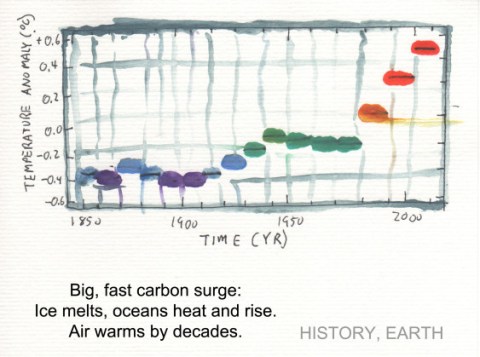
Today, information no longer belongs to the privileged few. Instead, we have the opposite problem: there’s more information out there than we can reasonably consume. We need the ‘explainers,’ people who can sort through the hard data and interpret crucial information for the rest of us.
Whether explaining how to adapt to a warming planet, apply for health coverage, or understand privacy online, this work of translation is more important than ever. Johnson’s haiku excel at this, but they’re just one example (think infographics, ‘listicles,’ or anything else that makes text easier to digest).
While these new ways of presenting information have been much maligned, Johnson’s work reminds me they can also be an incredibly effective way to communicate.
There’s no use calling it ‘wrong’ when there’s this much at stake.
 MARY GABLE
What do you think?